The most expensive thing in an e-commerce growth stack is no longer the ad spend. It's the creative. A single product photoshoot can run $5,000–$30,000 once you factor in studio, photographer, models, location, retouching, and the inevitable reshoots. Multiply that by the number of SKUs, channels, and seasonal refreshes a real brand ships, and "we need more creative" becomes a board-level problem.
Generative video changes the math. MiniMax — and tools like it — let a single operator produce product photography, lifestyle B-roll, and short-form ad creative in an afternoon that would have taken a studio three weeks. This article is a practical look at how that works, where it breaks, and what it actually costs — no hype, just the workflow we've seen work for real e-commerce teams in 2025.
The e-commerce video problem
Most e-commerce brands hit the same wall. A 200-SKU catalog, three ad channels (Meta, TikTok, Google), a creative team that can produce 30–50 ad assets a month — and a need for fresh creative every 7–10 days per ad set. The math doesn't work. You either burn out the team, blow the budget on agency retainers, or both.
On top of that, video has become table-stakes. Static product shots still work on PDPs, but on the feed — especially TikTok and Reels — video outperforms stills on engagement and click-through. Ship only stills and you lose auctions to competitors running a continuous video creative engine.
The traditional fix is straightforward: spend more, hire more, accept that the bottleneck is creative production. The AI-native fix is different — it's not about replacing your existing team, it's about making one person able to output what used to take a five-person studio. The remainder of this article walks through how that plays out across the three places e-commerce brands spend creative dollars: product photography, lifestyle B-roll, and ad creative.
🛒 Shipping a DTC catalog? Most e-commerce teams start on the Pro plan and upgrade to Business once SKU volume climbs past 50.
See Pro plan →AI product photography
Clean on-white product shots used to require a photo studio, a tethered camera, a light tent, and a retoucher. Now they require one product photo, a MiniMax prompt, and 30 seconds of generation time. The output is a fresh, on-brand render of your product — whatever background, lighting setup, or angle you describe.

The workflow in practice:
- Capture one clean reference shot of the product on a neutral background. A phone photo in even daylight works for most SKUs.
- Write a short prompt for the target scene — lighting, surface, angle, palette, mood. Most winning prompts are under 60 words.
- Generate 4–8 candidates, pick the strongest, refine with a second pass if needed.
- Export at the resolution and aspect ratio your storefront or ad platform needs.
For a 200-SKU brand, the time savings are not subtle. Where a traditional catalog refresh might take 4–6 weeks and a five-figure budget, the AI equivalent is typically 1–2 days and a few hundred dollars in token cost. The constraint shifts from production capacity to prompt craft — a learnable skill, not a bottleneck.
Notes from teams running this at scale:
- Anchor on the first frame. For product fidelity, image-to-image conditioning with the real product as the first frame gives far better brand accuracy than text-only prompts.
- Batch your prompts. Write a prompt library per category (skincare, drinkware, apparel) so you can re-roll 50 SKUs in a sitting without rewriting scaffolding.
- Keep one real photo per SKU. PDPs (the actual product page) still benefit from a faithful real-world photo. Use AI for the surround — lifestyle, ad creative, social — and keep one authentic hero shot.
Lifestyle B-roll generation
Static catalog imagery is the easy win. Lifestyle B-roll — the "person holding the product in golden-hour kitchen" shots that fill out a brand's visual library — is where AI video shifts the production curve. A 10-second lifestyle clip that would have required a location, a model, a DP, and a day of shooting now takes one prompt and a minute of compute.
The unlock is that B-roll doesn't have to be your product. A 4-second clip of a hand setting down a coffee cup, sunlight raking across a wooden table, a window in soft focus — these shots fill out a brand video, sit behind a product testimonial, or anchor the first three seconds of a TikTok ad. None require your SKU to be on camera, but all are tedious (and expensive) to shoot for real.
A 10-clip B-roll library workflow:
- Define 5–10 visual "moods" (warm morning, cool studio, outdoor café, marble counter)
- Generate 2 candidates per mood, 4-second clips each, with a consistent style anchor in the prompt
- Curate the best 10–15 clips into a shared library
- Reuse them across PDPs, ad creative, email, and social
The first time, the B-roll library takes a few hours. The second time, with a prompt template, it's an afternoon. Compared to even a modest $4,000 lifestyle shoot, the ROI is immediate. And unlike a one-time shoot, the library keeps extending — add a "winter holiday" mood in November, a "spring drop" mood in March, never rebook a crew.
One honest caveat: AI B-roll can still feel uncanny on close-ups of hands, faces, and skin. Current models are excellent at product surfaces, food, environments, and abstract textures; less reliable on detailed human motion. For lifestyle shots without a recognizable face, MiniMax output is publishable. For talent-led content, most teams still pair AI B-roll with one real talent shoot per quarter.
Ad creative at scale
This is where the unit economics get interesting. Paid social creative is the single largest line item for most e-commerce brands, and most of it is throwaway. A Meta ad set typically fatigues in 7–14 days. To stay in market, you need to ship new creative faster than fatigue sets in — impossible at traditional production speeds for most teams.
Generative ad creative flips the bottleneck. Instead of "how do we shoot 20 ad variants this month?", the question becomes "which 5 winning hooks do we want to test, and how many visual variants of each do we want to spin up?"
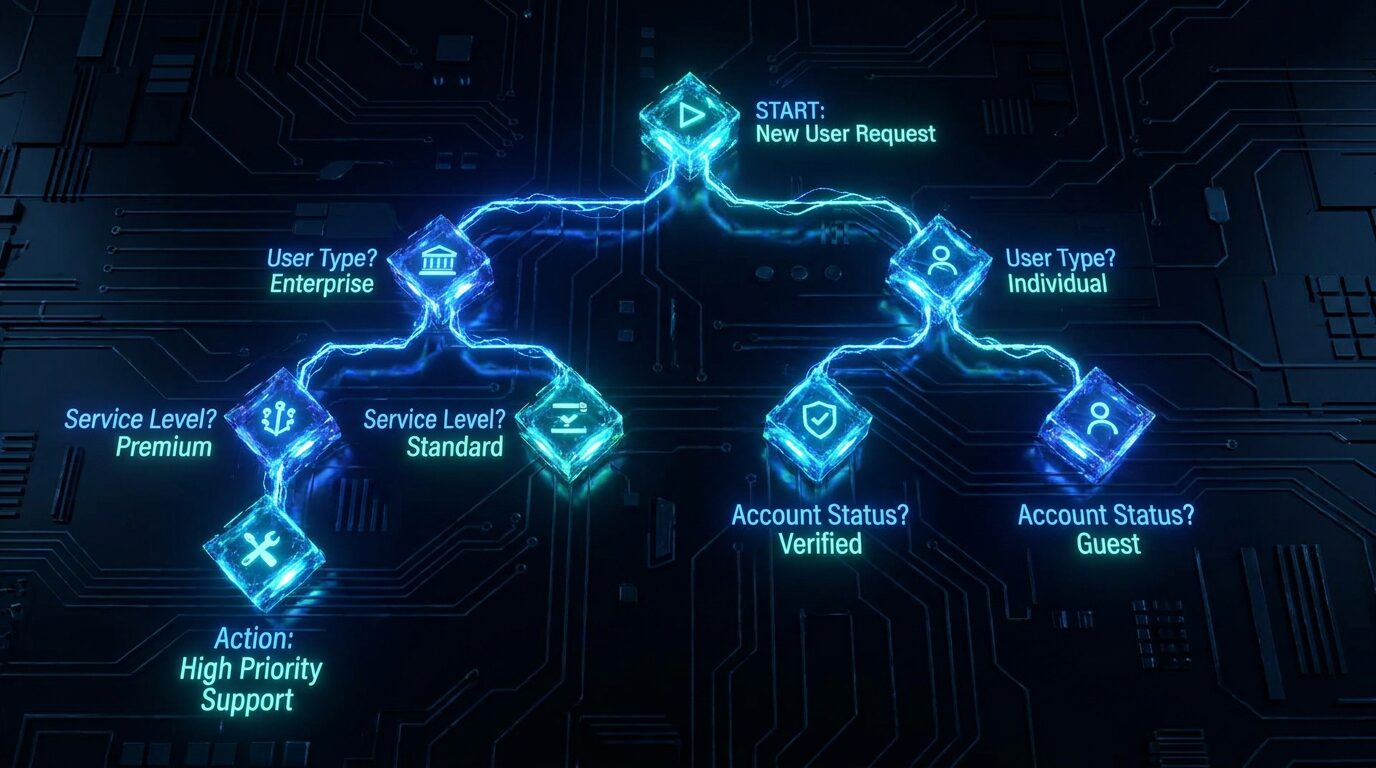
A typical MiniMax ad-creative loop:
- Identify a winning hook (the first 3 seconds that earn the rest of the view) — still mostly a human insight pulled from reviews, UGC, or top organic posts.
- Generate visual variants: 5–10 scenes that all start with the same hook — different backgrounds, props, lighting, color grades.
- Mix hook and variant in your editor of choice (CapCut, Premiere, even a spreadsheet of concatenated clips).
- Ship 10–20 variants into Meta or TikTok, let the auction pick winners, refresh the top 20% weekly.
The output is more ad creative, faster, with a much larger test surface. If your top 3 creatives historically drove 60% of revenue, generating 30 viable variants means the auction finds a new top 3 in days, not months — and the new top 3 is often 20–40% more efficient because it matches micro-audiences better.
The team role evolves too. The "ad designer" becomes the "ad prompt engineer" — someone who writes tight prompts, evaluates outputs quickly, and remixes what works. That's a smaller, more senior hire than a production designer, and the savings usually pay for the new tooling inside the first month.
Cost comparison: traditional product video vs. MiniMax
The most common question we get from e-commerce founders is: "what does this actually cost, in dollars, compared to what I'm doing now?" The honest answer is "it depends on what you're doing now" — so the table below is an apples-to-apples breakdown for a mid-market DTC brand producing ~30 finished ad or PDP assets per month.
For a deeper look at MiniMax plan pricing, our token plans explained guide has the full tier breakdown.
| Line item | Traditional product shoot | MiniMax workflow |
|---|---|---|
| Studio + location rental | $1,500 – $5,000 / day | $0 |
| Photographer / DP | $1,200 – $3,500 / day | In-house operator (already on payroll) |
| Models / talent | $500 – $2,000 / talent / day | $0 (or 1 real-talent shoot / quarter for hero content) |
| Retoucher / editor | $75 – $150 / hour | $0 (generation is final-quality or near-final) |
| Props, styling, catering | $300 – $1,000 / day | $0 (in-prompt only) |
| Tooling / software | Adobe CC $60 / mo, Capture One, etc. | MiniMax Pro plan $39 / mo |
| Generation / compute cost (30 assets / mo) | — | ~$50 – $200 in token usage |
| Time to deliver 30 assets | 2 – 4 weeks | 1 – 3 days |
| Total monthly cost (mid-range) | ~$8,000 – $18,000 | ~$200 – $500 (plus existing team) |
| Cost per finished asset | ~$270 – $600 | ~$7 – $17 |
Two important caveats, because the numbers above will be wrong for someone:
- If you need high-end talent-led hero content (a model in Santorini for your apparel drop), AI is not yet a substitute. Most brands keep 1–2 real talent shoots per year and use AI for everything in between.
- If you already have an in-house creative team, the realistic outcome is they ship 5–10× more creative at the same payroll cost, not that you fire them.
For most mid-market DTC brands we've talked to, the realistic comparison is "AI workflow with one in-house operator" vs. "traditional workflow plus an agency retainer." The AI workflow is usually 70–90% cheaper at the same output volume, with the bonus of being able to scale output up on a Tuesday afternoon if a competitor launches something new.
Real use cases
Three concrete examples, anonymized but representative of what teams are actually shipping in 2025. None are projections — patterns we've seen repeated across categories.
DTC skincare brand — 80-SKU catalog refresh
A mid-size skincare brand refreshed 80 PDP hero images for a seasonal drop. The traditional estimate was $22,000 and four weeks with their agency. Using MiniMax, a single in-house designer re-rendered all 80 in three working days for ~$180 in tokens. They kept retouched bottle shots as anchors and generated fresh lifestyle backgrounds per SKU. Conversion held flat; they shipped two months ahead of plan into a fully stocked search and ad pipeline.
DTC cookware brand — TikTok ad creative engine
A DTC cookware brand was running ~12 ad variants per month and burning out after two weeks. They shifted to a MiniMax-driven loop: every Monday the marketing lead prompts 15 new visual variants of their top three hooks, ships the winners by Wednesday, and refreshes the bottom-of-funnel sets the following Monday. Output went from 12 to 50+ variants a month, and blended ROAS improved 22% the next quarter — driven mostly by always having fresh creative in market.
B2B gifting brand — monthly catalog email
A B2B corporate gifting brand sends one curated email per month to 40,000 office managers, each with 12–15 product images. With traditional photography, this meant a 2-day shoot monthly. The team now uses MiniMax to generate the hero images in a single morning, using a shared style anchor prompt and per-SKU variations. Open rate held flat, click-through improved 8%, and the team reclaimed ~20 hours a month of designer time.
The common thread across all three: the team kept doing what they were doing, but the production bottleneck disappeared. Nobody got fired. The constraint just moved from "how do we afford to ship this?" to "what should we ship next?" — which is the right constraint to have.
Frequently asked questions
Can AI-generated product videos actually convert?
Yes — for top-of-funnel and catalog creative, conversion rates on AI-generated assets typically fall within 5–15% of studio-shot equivalents in published DTC case studies. For hero-brand campaigns, most teams still mix AI with select real-photography shots.
How long does it take to generate a MiniMax product video?
A 4-second clip with first-frame image conditioning typically renders in 30–90 seconds on the Pro plan. A full 15–30 second product spot built from 4–8 stitched clips can be assembled in under an hour by one operator.
Do I need the physical product to generate imagery?
Not necessarily. You can prompt from a written description, a sketch, or a single reference image. For best results on hero shots, supply a clean product photo as the first-frame anchor for faithful color, shape, and texture.
What about brand safety and IP risk for AI product photos?
MiniMax's commercial tiers include usage rights for the assets you generate. Brands in regulated categories (food, supplements, cosmetics) should still run generated imagery through legal review, and disclose AI involvement where required by local ad law.
Which MiniMax plan is best for an e-commerce team?
Most small DTC brands start on Pro ($39/mo) for catalog imagery and ad creative. Teams shipping daily creative typically upgrade to Business ($199/mo) for higher token volume, team seats, and priority queue.
Conclusion
AI-generated video for e-commerce isn't a future trend — it's a production reality in 2025. The teams that win the next two years of paid social won't have the biggest agency retainers; they'll ship more creative, test more variants, and stay in-market longer. MiniMax is one of the more capable platforms for that workflow today, especially for brands on a tight creative budget.
AI video won't replace a great brand photographer for the once-a-year hero shoot, and it shouldn't. What it will replace is the third reshoot of the same tabletop, the agency invoice for "creative refresh round 2," and the 6-week wait between campaign ideas. If your team ships fast, the workflow will feel familiar.
If you're new to MiniMax, our 10-minute quickstart is the fastest path to your first generated clip. If you're choosing between platforms, the best AI video generators of 2025 comparison is the most direct read.
Ship your first MiniMax product video today
Start with a Pro token plan and your first 30 product assets can be live by Friday. No contract, no commitment, cancel anytime.
👉 Get Your Token Plan Now*Affiliate link — we may earn a commission at no extra cost to you.