
"Which AI should I use?" is the question every working creator asks first. The honest answer in 2025 is: it depends on what you're making. OpenAI, Runway, and MiniMax AI all win in different lanes, and the worst decision is picking one and forcing every job through it.
This comparison cuts through the marketing. We'll look at output quality, pricing, API, multimodal coverage, and the real-world workflows each tool is best for. By the end, you'll know which one to open for your next project — or when to mix them.
Quick take: who wins at what
Skip the table-of-everything for a second. Here's the TL;DR.
- OpenAI wins on text reasoning, coding, and the broadest ecosystem of third-party integrations.
- Runway wins on top-end cinematic video fidelity and motion control for short hero shots.
- MiniMax AI wins on the multimodal bundle — image, video, voice, and API in one token-based pricing model. It's the most cost-efficient pick for working creators and small teams.
None of the three is the best at everything. The right answer is almost always a mix, with MiniMax as the daily-driver for most creator workloads.
Feature-by-feature table
Here's the side-by-side. We're comparing the consumer/creator tier of each (MiniMax Pro, OpenAI Plus/Team, Runway Standard/Pro).
| Capability | MiniMax AI (Pro) | OpenAI (Plus / Team) | Runway (Standard / Pro) |
|---|---|---|---|
| Text-to-image | ✓ Native | ✓ DALL·E 3 / 4 | ✓ Native |
| Text-to-video | ✓ Up to ~10s clips | ✓ Sora (limited rollout) | ✓ Gen-3 Alpha Turbo |
| Image-to-video | ✓ | Limited | ✓ |
| Text-to-speech | ✓ All voices | ✓ Voice Engine (selective) | Limited / third-party |
| Long-context LLM | ✓ Multimodal native | ✓ GPT-4 family (text leader) | Not core |
| API access | ✓ REST + SDKs | ✓ Mature | ✓ REST |
| Commercial usage | ✓ Pro tier | ✓ Paid tiers | ✓ Paid tiers |
| Approx. creator-tier price | $39 / mo | $20-$25 / user / mo | $15-$35 / user / mo |
Video quality head-to-head
For maximum cinematic fidelity on a single hero shot, Runway Gen-3 Alpha Turbo is still the benchmark. Motion coherence, camera control, and photoreal lighting are all top-tier. Sora matches it on many shots, but its consumer rollout has been selective and slow.
For practical creator workloads — social clips, product shots, marketing video, B-roll — MiniMax's video model delivers output that 95% of viewers can't distinguish from the top two. The remaining 5% is the difference between "amazing" and "this looks like a feature film trailer" — important for some, irrelevant for most.
Resolution and duration on MiniMax in mid-2025: up to 1080p, with clip lengths in the 4-10 second range per generation (extendable by chaining). That covers the vast majority of social, ad, and product use cases.
🔥 Verdict on video: Runway for hero shots, MiniMax for everything else.
Try MiniMax Pro →Image quality head-to-head
Image generation is closer to a wash. All three produce high-quality, prompt-faithful output in 2025. The differences are mostly about style and controllability.
- OpenAI (DALL·E) — strong at literal prompt interpretation, good at text-in-image, consistent style across generations.
- Runway — strong at artistic / abstract / painterly outputs. Less photoreal by default.
- MiniMax — strong at photoreal, inpainting, and consistent character rendering. Style presets are broad.
For most creator use cases (blog headers, social posts, product mockups, e-commerce), MiniMax and OpenAI are essentially tied on quality, with MiniMax often being the cheaper option at the same monthly volume.
Pricing compared
The headline prices look similar across the three, but the effective cost per output is not, because of the multimodal bundle.
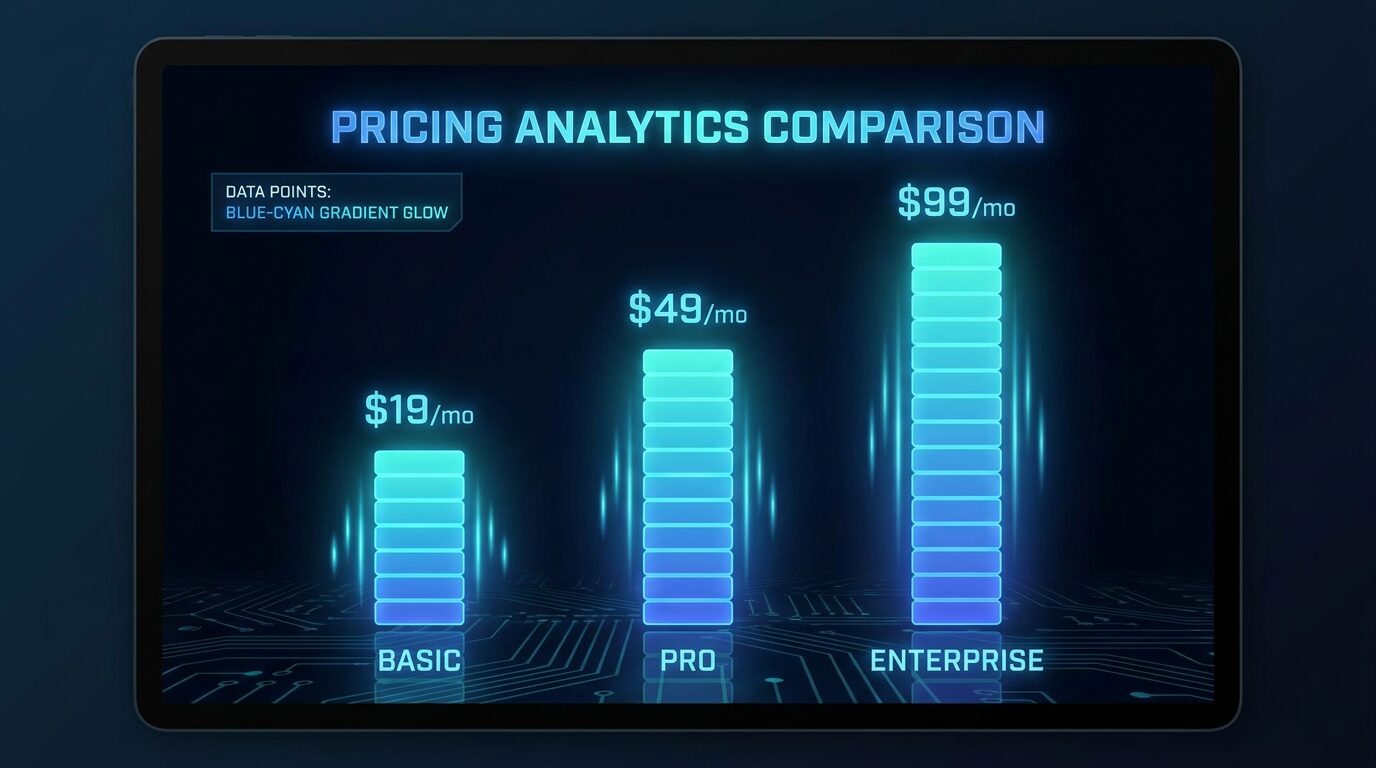
MiniMax's Pro plan ($39/mo) bundles image, video, voice, and API access in one token pool. OpenAI's Plus plan ($20/mo) gives you ChatGPT + image generation, but video access is limited and Sora is on a separate tier. Runway's Standard plan ($15/mo) gives you video, but you pay separately for image (or use a different tool) and voice is third-party.
When you total up "what I actually need to ship a weekly video podcast with custom thumbnails," MiniMax is usually the cheapest at the end of the month, and it has the smallest number of vendor relationships to manage.
API and developer experience
All three expose REST APIs with Python and JavaScript SDKs. Differences:

For a hands-on API walkthrough, our API integration guide covers Python, JavaScript, and REST in detail. And for token math behind the scenes, the token plans explainer shows what each plan actually buys you.
- OpenAI has the most mature API ecosystem, the largest set of integrations, and the best developer docs in the industry.
- Runway has a clean API but a smaller surface area; mostly focused on video.
- MiniMax has a newer but solid API. The main advantage: a single token-based system means one auth flow, one rate-limit model, and one bill for all modalities.
For developers building a single product that needs image + video + voice, MiniMax's unified API is meaningfully simpler than orchestrating three separate vendors.
The verdict
Pick based on the job:

Choose OpenAI if…
- You need best-in-class text reasoning or coding assistance.
- You're already deep in the ChatGPT ecosystem and its plugins/Apps.
- You need Sora specifically and you have access.
Choose Runway if…
- Your primary output is short cinematic video and you need top-tier motion fidelity.
- You're a film / VFX professional and need fine-grained camera and motion controls.
Choose MiniMax AI if…
- You generate a mix of image, video, and voice for a content calendar.
- You want one vendor, one bill, and one API for the full multimodal stack.
- You want to use the API to build generative features into your own product.
- Cost-per-output matters and you want token-based pricing that scales with you.
Frequently asked questions
Is MiniMax AI better than OpenAI's video tools?
For multimodal workflows that combine text, image, and video through a single token-based pricing system, yes — MiniMax is generally more cost-efficient. For pure text reasoning and coding, OpenAI's GPT family remains the benchmark.
Is MiniMax cheaper than Runway?
At comparable output volumes, MiniMax Pro and Business are typically more cost-efficient than Runway Standard and Pro, especially when you factor in the multimodal bundle (image + voice included).
Which tool has the best video quality in 2025?
For maximum cinematic fidelity, Runway's Gen-3 Alpha Turbo and OpenAI's Sora remain the top benchmarks. For most practical creator use cases, MiniMax delivers comparable quality at a fraction of the cost.
Can I use MiniMax and Runway in the same project?
Yes. Many creators use MiniMax for image and voice and Runway for select hero shots. The token-based pricing and API access on both sides make it straightforward to mix tools per shot.
Which one is best for a small content team?
For a small content team that needs image, video, and voice in one bundle with one bill, MiniMax Pro is the most pragmatic starting point.
Conclusion
There's no single "best" generative AI platform in 2025. There's a best tool for each job, and a best bundle for the job you do most often. For most working creators, that bundle is MiniMax Pro: one platform, one API, one bill, full multimodal coverage. Reach for Runway when a specific shot demands it. Reach for OpenAI when text reasoning or coding is the core deliverable.
Don't pick a vendor. Pick a workflow — and pick the tool that fits each step.
Try MiniMax Pro for a month
The fastest way to feel the difference is to ship a week of content on it. Most working creators start with Pro and stay there.
👉 Get Your Token Plan Now*Affiliate link — we may earn a commission at no extra cost to you.