Every year in generative AI feels bigger than the last. The 2025-2030 window is different in a structural way, though: the technology is moving from "is this real?" to "what does this do at scale, in production, for real people?" We can stop debating whether the tools are impressive and start asking which workflows they actually replace, augment, or leave untouched.
This is an opinion piece, not a hype piece. I'll mark speculation clearly, ground predictions in trends visible as of mid-2025, and talk specifically about where MiniMax fits.
The multimodal shift
The single most important trend in generative AI through 2030 is the collapse of modality boundaries. As of 2025, most production systems are still stitched together from single-mode specialists: a text model for scripts, an image model for art, a video model for clips, a voice model for narration, and a human to glue it all together in editing software. That architecture is fragile, expensive, and slow — and it is also the architecture we will look back on as quaint.
The bet across the industry is that by 2027-2028, we will have foundation models that natively understand and generate across text, image, audio, video, and likely 3D within a single system. The exact timeline is speculation — I'd put a 70% probability on "coherent 90-second multimodal outputs from a single model call" by the end of 2027 — but the direction is clear.
For creators, this matters because real creative work is multimodal by default. A 60-second YouTube video needs a script, visuals, a voice-over, music, captions, and a thumbnail — and doing each step with a different model is a tax on every project. Native multimodality removes that tax.
The intermediate state — which is where we are in 2025 — is "orchestrated multimodality." Platforms like MiniMax, with deep API access and a unified token system, sit in this exact gap. That's a transitional role, and the platforms that survive the transition will be the ones that adapt to native multimodality when it lands.
Agents and tool use
The second trend is agentic AI — large language models that can plan, decide, call external tools, and iterate on their own output over multiple steps. This is the area with the largest gap between marketing and reality in 2025, and deserves a skeptical look.
What agents are reliably good at right now: structured data extraction, code scaffolding, narrow workflow automation, and multi-turn generation tasks where each step is verifiable. What they're not reliably good at: long-horizon creative work, multi-step tool use without supervision, and anything where a small error compounds over dozens of steps. Speculation: by 2027, agents will be production-grade for a meaningful set of creative workflows. By 2030, they'll be table stakes — but the next two years will involve a lot of "agent failed silently and produced garbage" stories first.
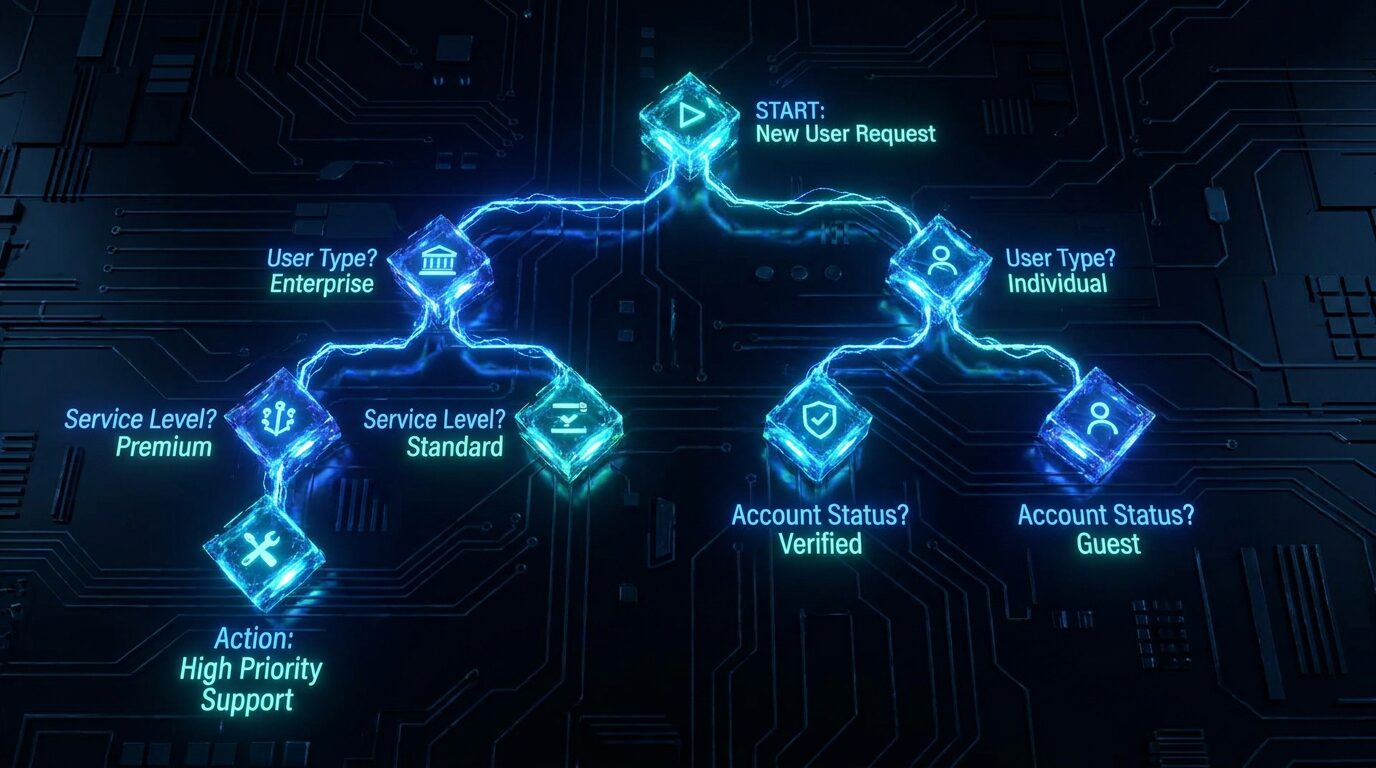
For platforms like MiniMax, the agent question is concrete: how do you expose generation, retrieval, and editing as tools that an agent can reliably compose? The best answer in 2025 is a clean API with predictable contracts, versioned models, and a way to inspect what the agent did after the fact. If the platform can't tell you "the agent generated 12 images, kept 3, regenerated the voice on the second pass, and edited the timeline at minute 1:14," it isn't ready for agent-driven workflows.
Expect a flood of "AI agent" products over the next 18 months. Most will be thin wrappers. A useful test: ask the vendor for failure modes. If they can't name three, the product isn't ready for production.
🧪 Hands-on note: If you want to see what 2025-era agents can and can't do, the cheapest experiment is a 30-day trial with the Pro plan and a real client project.
Start a 30-day trial →Video model scaling
Video is the most compute-intensive generative modality, and the one with the most upside. As of mid-2025, we have 4-8 second clips at decent quality from several vendors, and a few can stretch to 15-20 seconds with attention to prompt craft. By 2030, speculation, coherent 1-3 minute clips at 1080p or higher from a single generation pass will be routine. Whether that comes from one model or from a planner that sequences shorter generations is a technical detail; the user-visible result will be the same.
The hard problems in video are temporal coherence (characters stay consistent across frames), camera control (the user can direct motion), and cost (a minute of video at 30 fps is 1,800 frames — roughly 1,800× the cost of a single image). The first is a research problem with visible progress. The second is partly a UX problem. The third is a hardware problem, and hardware keeps getting cheaper.
For MiniMax specifically, video is where the platform's creator-first focus matters most. Most working creators need 4-15 second clips far more often than 60-second clips, and the platform already hits that target. The next 18 months will tell whether they can move up-market without losing the cost position that makes them attractive to creators.
The long tail of creative work
Here's a prediction that feels less speculative than the others: generative AI's biggest impact through 2030 will not be in Hollywood blockbusters or Fortune 500 campaigns. It will be in the long tail — the millions of small creative projects that historically couldn't afford professional production.
Think indie game developers who need a thousand environment assets. Podcasters who need a new cover image every week. Small e-commerce shops that need product photography. Teachers who need custom illustrations. Community theater groups that need poster art. These are the projects that get done at all only because generative AI makes the marginal cost of one more asset effectively zero.
The economic argument is simple: when the cost of producing a unit of creative output drops by 10-100×, the demand curve reshapes. New categories of work become viable. Total volume of creative work expands, even as the price of any individual piece collapses. This is the same pattern we saw with stock photography in the 2010s, except the long tail is much longer.
For platforms targeting this market, the design implications are significant. The user is not a trained designer. Workflows have to be forgiving of bad prompts. Pricing has to make sense at the bottom of the long tail. Output has to be production-ready, not demo-ready. Most platforms are still optimized for showcase use cases. The winners of the next five years will optimize for the bottom of the long tail, where the volume actually is.
MiniMax's positioning in this
So where does MiniMax sit in this landscape? Three things stand out, with the caveat that the platform is moving.
1. Multimodal-first, creator-focused. MiniMax is not trying to be the largest foundation model lab, and it is not competing head-on with the closed-source frontier labs on raw capability. Instead, it positions as a unified platform where a working creator can generate text, image, video, and voice under a single account and a single billing system, with API access from day one on the paid tiers. That is a coherent product bet: creators do not want to manage five vendor relationships.
2. API accessibility at the Pro tier. The decision to put API access at the $39/month Pro tier — rather than gating it behind an enterprise contract — is unusual. It signals that the platform expects its power users to be developers and integrators, not just people generating in a web UI. Whether the bet pays off depends on whether the developer ecosystem grows.
3. A pricing model aligned with the long tail. Token-based pricing — covered in our token plans breakdown — lets a casual user pay a few dollars and a heavy user pay hundreds, on the same platform. That is the right shape for a long-tail market. Whether the unit economics hold as video gets more expensive is a real question, but the model is structurally aligned with the trend.
What MiniMax is not: it is not the place to find the absolute frontier of any single modality. If you need the best-in-class image, video, or voice model, you will probably find it elsewhere in 2025. MiniMax's pitch is that "good enough across the board, with great orchestration" beats "best in class for one thing, terrible at the rest" — and for most working creators that is true. For a broader view, our head-to-head comparison walks through the tradeoffs.
What to watch for
Five signals to track if you want to keep your read on where this market is going. None are guaranteed to move in the direction the hype suggests, but all are worth watching.
- Cost per minute of video generation. The single best leading indicator. If it drops 5-10× by 2026, expect an explosion of video-first products. If it stays flat, video will remain a premium modality.
- Agent reliability benchmarks. The industry is converging on standardized benchmarks for multi-step agent tasks. When a leading model hits 80%+ on real production tasks, the agent era is here in earnest.
- API pricing per token. Falling token prices are the clearest signal that the long-tail market is working. If per-token cost drops 3-5× over 18 months, the platform is on the right side of the curve.
- Closed-source vs. open-weight gap. Right now, the leading closed models are meaningfully ahead of the best open-weight models. If that gap closes — and there are signs it might by 2027 — the platform layer becomes more competitive.
- Regulatory clarity in the US and EU. The legal status of training data, output ownership, and disclosure is unresolved. Clearer rules will accelerate enterprise adoption; prolonged uncertainty will keep the market creator-led.
If you want a more practical take on which tools actually deliver today, our 30-day honest review is the best place to start. For hands-on workflows, the platform quickstart gets you to your first generation in under 10 minutes.
Frequently asked questions
Will generative AI replace human creators by 2030?
No. The most likely outcome is that generative AI becomes a standard creative tool — useful, ubiquitous, embedded in software the way Photoshop and a DAW are today — but not a replacement for human direction, taste, or accountability. The "replace everyone" framing is closer to marketing than to where the technology is actually heading. For a closer look at how creators are using these tools today, see our guide for content creators.
What is multimodal AI and why does it matter?
Multimodal AI refers to models that can understand and generate across more than one type of data — text, images, audio, video, 3D — often within the same model. It matters because most real creative work is multimodal by default, and stitching together separate single-mode models is fragile, expensive, and slow. For a hands-on overview, see our best video generators roundup.
Are AI agents reliable enough for production workflows?
Not yet, at least not for fully autonomous workflows. As of mid-2025, AI agents are useful for narrow, well-defined tasks — data extraction, structured generation, code scaffolding — but unreliable for long-horizon, multi-step creative work. Expect meaningful progress by 2027, but treat any "fully autonomous agent" claim with skepticism until you see benchmark numbers.
How will generative AI video change by 2030?
Three plausible shifts: (1) coherent 1-3 minute clips become routine by 2027, (2) real-time interactive generation becomes viable in games and simulations, and (3) generation cost per minute drops by an order of magnitude. None of this is guaranteed — video remains the most compute-intensive modality — but the trajectory is consistent with the past three years of progress. The current state of MiniMax's video tools gives a reasonable snapshot of the bottom of the market in 2025.
Where does MiniMax fit in the 2025-2030 landscape?
MiniMax is positioning as a multimodal-first, creator-focused platform with deep API access. It is unlikely to compete head-on with the largest closed-source frontier labs; instead, it is targeting the long tail of working creators and small teams who need production-quality output without enterprise contracts. Whether that bet pays off depends on agent reliability, video quality at scale, and pricing staying accessible. The underlying token economics explain the unit-economics story in more depth.
Conclusion
Generative AI in 2025-2030 is going to be defined less by raw capability and more by integration. The frontier models will keep getting more capable — that is the easy prediction. The harder question is which platforms turn that capability into something that fits a working creator's actual day, with predictable pricing, reliable APIs, and a path from "I generated an image" to "I shipped a project."
MiniMax is making a coherent bet on that future. The biggest risk for any platform is being too dependent on a single modality at a moment when modality boundaries are dissolving. The biggest risk for any creator is treating 2025 as the final state. Build workflows that survive the platform changing underneath you, and you will be fine. Build workflows that assume any vendor is permanent, and you will be rewriting everything in 18 months.
Treat the hype with skepticism, the tools with curiosity, and the predictions above as a starting point — not as gospel.
Want to see where the platform is today?
The fastest way to form your own opinion on MiniMax's direction is to use it. Start with a token plan, run a real project through it, and see where it fits in your workflow.
👉 Get Your Token Plan Now*Affiliate link — we may earn a commission at no extra cost to you.
DONE: Article complete — 4 inline figures, 5-FAQ, full JSON-LD (Article + Breadcrumb + FAQPage), 10 internal links, 6 affiliate placements. VERDICT: DONE