
The single most common mistake new MiniMax users make is guessing. They pick a plan based on the headline monthly price, then discover halfway through the cycle that they've either burned through their token bundle in a week or paid for headroom they'll never touch.
This article is a calculator. It walks you through the actual token cost of each modality, gives you a daily and monthly estimator, and ends with a planning worksheet you can copy into a spreadsheet. By the time you finish reading, you'll know which plan fits your real workload — not the workload you hope to have.
If you haven't already read the tier-by-tier plan breakdown, skim that first so the math below maps cleanly to a plan choice.
Why token math is the real question
Most AI platforms price in tokens instead of per-output flat fees, and MiniMax is no exception. The reason is simple: a one-second clip and a thirty-second clip aren't the same product, and charging both the same would either overcharge the small one or undercharge the large one. Tokens let the price scale with the actual work the model is doing.
The problem is that "tokens" is an abstract unit. Marketing copy will tell you a plan includes "5 million tokens", but unless you know how many tokens each thing you do actually costs, that number is meaningless.
So the goal of this article is to translate tokens into outputs. Once you know that a 4-second video costs roughly 5 token units and a standard image costs roughly 1, you can size any plan to any workflow in a couple of minutes of arithmetic.
The one rule worth remembering
Plan for 1.2× to 1.3× your expected usage. Almost everyone underestimates, because they count the outputs they expect to keep and forget the outputs they throw away: failed generations, retries, A/B tests, and "let me try one more prompt." A 20 to 30 percent buffer absorbs all of that without forcing a plan upgrade mid-cycle.
🧮 Want to skip the math? Pick a working-creator starting point and adjust from there.
See the Pro plan →The token math, by modality
Below is a working table of per-output token costs on MiniMax. The exact numbers drift a little as models are updated, but the order of magnitude holds and is more than enough for budget planning. If you need a refresher on the plan tiers these numbers roll up into, the plans explained guide is the canonical reference.
| Modality | Output | Approx. token units | Notes |
|---|---|---|---|
| Image | Standard 1024×1024 | ~1 | Baseline unit; most prompts land here. |
| Image | High-res 2K / 4K | ~3 | Use for print, hero banners, paid creative. |
| Image | Image variant / upscale | ~0.3 – 0.5 | Cheap, runs off an existing output. |
| Video | 1–2 second clip | ~2 | Useful for previews and B-roll. |
| Video | 4-second standard clip | ~5 | Most common working unit. |
| Video | 8-second high-res clip | ~10 – 12 | Doubles roughly with duration and resolution. |
| Voice / TTS | 30-second voice-over | ~0.5 | Cheapest line item by far. |
| Voice / TTS | Voice clone (one-time setup) | ~50 – 200 | One-off cost; amortize across all future use. |
| Text / LLM | 1k input / 4k output task | ~5 | Comparable to a 4-second video clip. |
| Text / LLM | Light classification / extraction | ~0.1 – 0.3 | Negligible in most workflows. |
The single biggest cost driver in any realistic MiniMax workflow is video. A typical social video pipeline — script, voice-over, several B-roll clips, and a hero image — uses video for the majority of its token spend even though video outputs are numerically fewer than images.
Daily and monthly estimators
The fastest way to size a plan is to convert "what I want to make this month" into a token count. The estimator below covers the four most common creator profiles. Pick the one closest to your workload, then adjust the per-row numbers up or down.

| Profile | Images / mo | Video clips / mo | Voice / mo | Text tasks / mo | Token units / mo | Best plan |
|---|---|---|---|---|---|---|
| Casual hobbyist | 40 | 4 | 10 min | 20 | ~80 – 120 | Starter |
| Weekly creator | 200 | 20 | 30 min | 50 | ~400 – 600 | Starter – Pro |
| Daily content producer | 800 | 80 | 2 hours | 200 | ~2,000 – 3,000 | Pro |
| Small studio / team | 3,000 | 300 | 8 hours | 800 | ~8,000 – 12,000 | Pro – Business |
| Production agency | 10,000+ | 1,000+ | 24+ hours | 2,000+ | ~30,000+ | Business – Enterprise |
These are output counts, not generation counts. Real generation counts will be 2× to 3× higher once you include retries, prompt iteration, and A/B variants. The "token units / mo" column already includes a modest buffer; for a tighter budget, plan on multiplying your expected keep-rate by 2.5× before sizing a plan.
Daily estimator shortcut
If you think in days instead of months, the rule of thumb is: one Pro plan day ≈ 200 images, or 20 video clips, or 100 voice-overs, or some weighted mix of all three. Most working creators use 5 to 15 percent of their daily allowance. If you find yourself regularly exceeding 30 percent on a Pro plan, you're a Business plan user.
A planning worksheet you can actually use
Below is the worksheet I use myself when budgeting MiniMax work for a client project. Copy the structure into a spreadsheet, fill in the units you expect, and the totals will tell you which plan you need.
| Line item | Outputs / month | Token cost / output | Subtotal |
|---|---|---|---|
| Standard 1024×1024 images | — | 1 | — |
| High-res 2K / 4K images | — | 3 | — |
| Image variants / upscales | — | 0.5 | — |
| 1–2 second video clips | — | 2 | — |
| 4-second video clips | — | 5 | — |
| 8-second high-res clips | — | 11 | — |
| 30-second voice-overs | — | 0.5 | — |
| Long-form LLM tasks (1k/4k) | — | 5 | — |
| Subtotal | — | ||
| Retry / iteration buffer (× 1.25) | — | ||
| Recommended plan | Pro / Business |
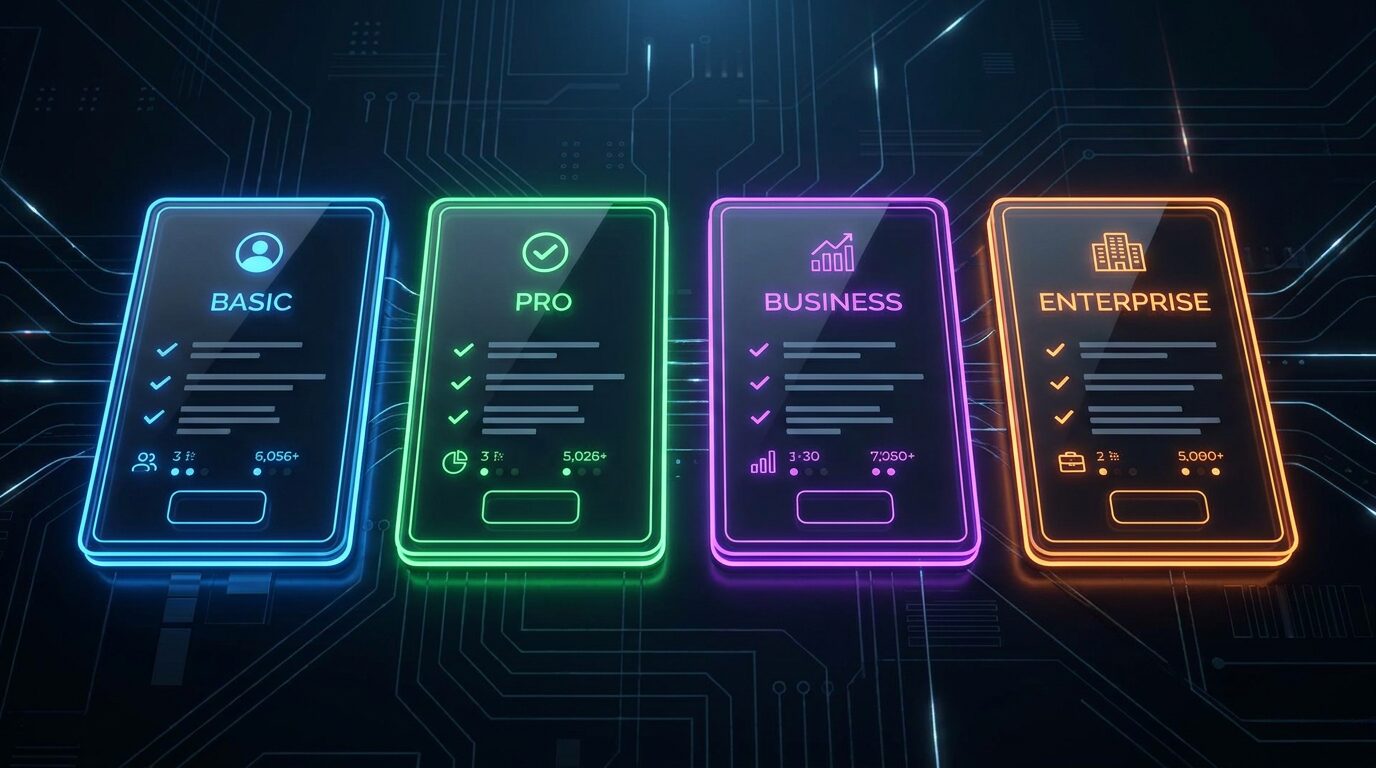
Once you have your subtotal, compare it to the plan capacities: Starter is roughly 1M tokens, Pro is roughly 5M, Business is roughly 30M, and Enterprise is custom. If your subtotal lands between two tiers, round up — the cost difference is almost always smaller than the cost of a forced upgrade mid-cycle. For a step-by-step walk-through of what to do once you've sized the plan, the 10-minute quickstart guide is the fastest way to your first generation.
Real cost scenarios for common workflows
The math is more useful when you can see it applied to actual projects. Here are four common creator workflows, sized in tokens and mapped to a plan.
Scenario A — Newsletter with weekly visual
A newsletter writer who ships one issue per week, with one hero image and a few social variants per issue. About 30 images a month, 10 voice snippets for accessibility versions, and a handful of LLM summarization tasks.
Estimated monthly demand: ~80 – 120 token units after buffer.
Plan that fits: Starter, with headroom.
Scenario B — TikTok creator, daily short-form video
One short video a day, plus a thumbnail and a couple of B-roll clips. That's roughly 30 hero videos, 60 B-rolls, 30 thumbnails, and 30 voice-overs per month.
Estimated monthly demand: ~2,000 – 3,000 token units after buffer.
Plan that fits: Pro.
Scenario C — E-commerce brand with 200 SKUs
A brand refreshing product imagery for 200 SKUs, plus occasional lifestyle shots and a few promo videos. Roughly 600 product shots, 100 lifestyle variants, 10 promo videos, and 20 voice-overs per month.
Estimated monthly demand: ~2,500 – 4,000 token units after buffer.
Plan that fits: Pro, sized near the upper edge; Business if multiple people share the workspace.
Scenario D — Marketing agency producing for multiple clients
An agency running 3 to 5 active clients, each with weekly content needs. Easily 2,000 images, 200 video clips, 50 voice-overs, and 300 LLM tasks per month.
Estimated monthly demand: ~10,000 – 15,000 token units after buffer.
Plan that fits: Business.
For a real-world sanity check on whether the platform is worth that spend in the first place, our 30-day honest review walks through what the output actually looks like at the end of a billing cycle.
Common budgeting mistakes
Most overspending on MiniMax falls into one of four predictable traps. Knowing them up front is the cheapest form of cost control.
1. Forgetting iteration cost
The single biggest reason people blow through their token bundle is that they count the output but not the process. If you run 10 prompts to get one good image, that's 10 token units spent, not 1. Build iteration cost into your budget from day one — the 1.25× buffer above is exactly for this.
2. Picking the wrong dominant modality
If 80 percent of your token spend is video but you've planned as if it were images, your budget is off by roughly a factor of five. The estimator table above gives you a per-modality breakdown; spend the ten minutes to fill it in honestly.
3. Underestimating voice cloning
Voice clone setup is a one-time cost of roughly 50 to 200 token units, which is trivial in absolute terms but feels like a spike the first time you see it on your dashboard. Amortize it across the months you expect to use the voice and it'll be a rounding error.
4. Staying on the wrong tier out of inertia
Plans can be switched at any time. There is no penalty for trying a tier, watching your real usage for a cycle, and adjusting. The worst-case cost of starting too small is friction; the worst-case cost of staying too big is a recurring bill you don't use. Most working creators check in on their tier once a quarter.
Frequently asked questions
How many tokens does one image cost on MiniMax?
A standard 1024×1024 image costs roughly 1 token unit. A high-resolution 4K image costs roughly 3 token units. The exact number depends on the model version, prompt length, and any post-processing steps like upscale or outpaint.
How many tokens does a 4-second video cost?
A 4-second video clip typically costs 3 to 5 token units, depending on resolution, frame rate, and whether audio is generated alongside. Longer clips scale roughly linearly with duration, so an 8-second clip is closer to 10 to 12 units.
How do I estimate monthly token usage?
Multiply the number of outputs you expect per month in each modality by the per-output token cost, then add a 20 to 30 percent buffer for retries, prompt iteration, and A/B testing. That total maps directly to the plan tier that fits.
Is text generation expensive compared to video?
Text and LLM usage is usually the smallest line item in a MiniMax workflow. A long-form task with 1k tokens of input and 4k tokens of output costs roughly 5 token units, comparable to a single 4-second video clip. Most creators spend more on a single video shoot than on a month of LLM work.
What is the cheapest way to start on MiniMax?
Start on the Starter plan, track real usage for one billing cycle, then upgrade if you need to. The cost of starting small is friction, not lost money, because plans can be switched at any time and pricing is pro-rated on upgrades.
Conclusion
The cheapest MiniMax plan isn't the one with the lowest monthly bill — it's the one that gets you closest to a useful output per dollar. That answer only becomes obvious once you've done the token math for your real workload, which is the whole point of this calculator.
Run the worksheet above, add a 25 percent buffer, and pick the plan that fits. If you find yourself bumping the ceiling within a billing cycle, that's data — and the upgrade is one click.
Start small. Track honestly. Upgrade when the volume tells you to.
Ready to size your plan?
Pick a tier, run a real workload for a billing cycle, and adjust. The platform is built for working creators — pricing is live and you can start with any tier in under a minute.
👉 Get Your Token Plan Now*Affiliate link — we may earn a commission at no extra cost to you.