
If you've heard people talk about "MiniMax" and weren't sure whether it was a model, a company, a vibe-coded app, or a tool, you're not alone. The brand is moving fast, the surface area keeps growing, and the marketing tends to lean on the word "multimodal" without always unpacking what that means in practice.
This guide is the long-form unpacking. It covers what the platform actually is, where it came from, the four generation modalities it ships with, what's happening under the hood in the LLM stack, how token pricing works, who realistically uses it, and how it compares to the other multimodal tools you might already be paying for. By the end, you'll know whether MiniMax is something you should try, integrate, or skip.
What MiniMax AI actually is
MiniMax AI is a multimodal generative AI platform that exposes four creative modalities — text, image, video, and voice — through a single Studio interface and a single token-priced API. The pitch: instead of stitching together a separate text model, image model, video model, and TTS provider, you generate everything from one account.
In day-to-day terms, the platform is a web app called the Studio, plus a public API. Inside the Studio you can open four panels: a chat panel for text, an image panel for diffusion-based generation, a video panel for short-clip generation, and a voice panel for TTS and voice cloning. They share the same sidebar — projects, history, brand kits, account — so the workflow feels cohesive rather than four tools glued together.
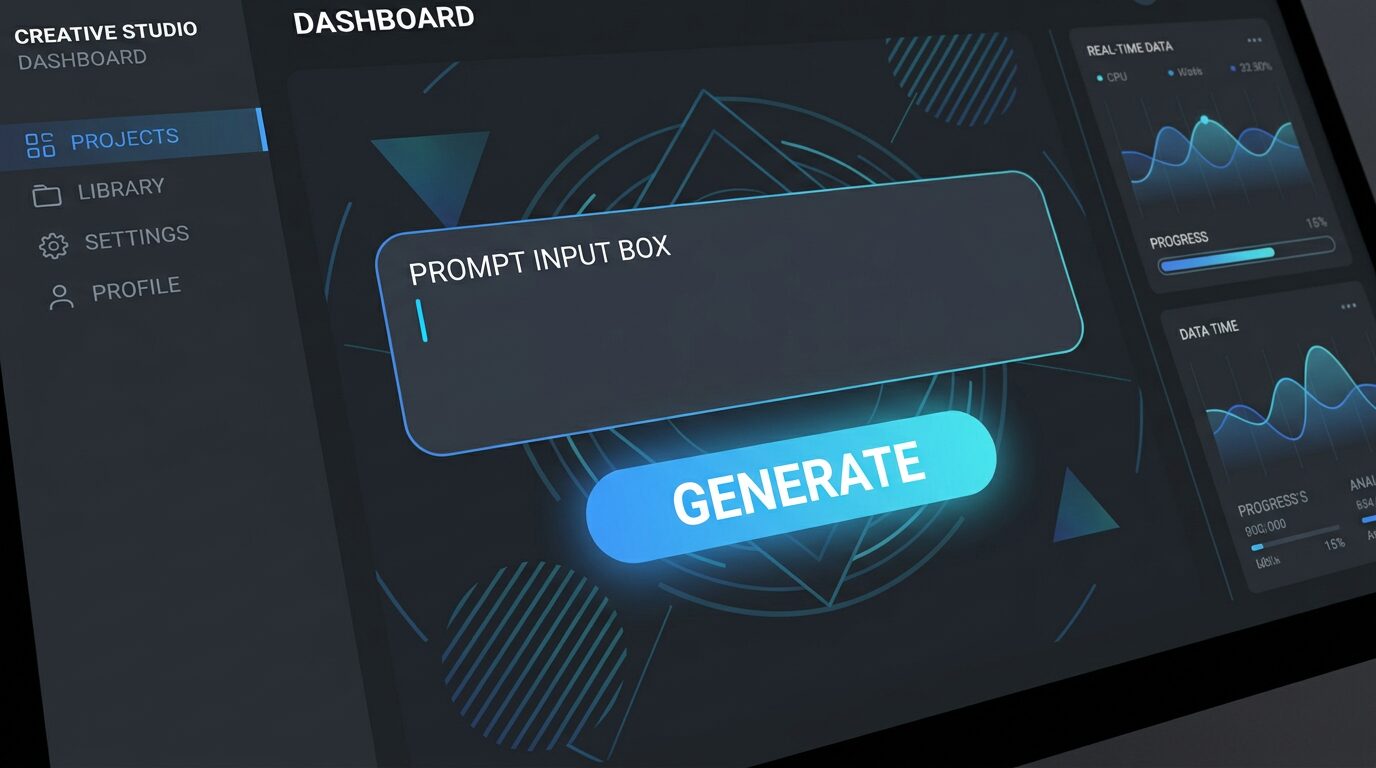
Underneath the UI is a token-economy model: a token is a unit of compute scaled to the size and complexity of what you're generating. Your monthly plan grants a token bundle; generations spend tokens; leftover usage is reported in real time. The headline is that MiniMax is priced like a SaaS, not like an API-only product, which makes the cost more predictable for working creators.
Where MiniMax came from
MiniMax launched in 2023 as a text-and-image generative service, founded by a small team out of adjacent AI infrastructure and open-source LLM work. The original pitch was a chat product aimed at developers who wanted a low-friction alternative to the dominant closed-source APIs. By early 2024 the team had added image generation, and by mid-2024 it was clear the company was heading toward a multimodal platform.
The big shift came in late 2024 with the launch of the first video model. Around the same time, MiniMax began bundling the four modalities into a single subscription and exposing them through a unified API. The token-economy pricing model rolled out shortly after, replacing per-generation flat fees and making the platform much more attractive to creators who mix modalities in the same project.
Throughout 2025, MiniMax has added capabilities: longer video durations, higher-resolution image outputs, more natural-sounding TTS voices, voice cloning on higher tiers, and an expanded set of API endpoints. The platform is now one of the more established "all-in-one" multimodal options for individual creators and small-to-mid teams.
The four modalities: text, image, video, voice
The single most important thing to understand about MiniMax is that it ships with four distinct generation pipelines, not one model that does everything. Here's what each modality does, what it's good for, and what the practical limits are.
1. Text (LLM)
The text modality is a chat-and-completions LLM comparable to the public general-purpose models you've used elsewhere. It handles long-form writing, summarization, structured extraction, code generation, and conversational replies. In the Studio it shows up as a chat panel; in the API it follows the usual /v1/chat/completions pattern. Token usage for text is typically much lower than for image or video, so it is rarely the budget bottleneck.
2. Image
The image modality is a diffusion-based generator that produces still images from text prompts, with optional reference images, negative prompts, and aspect-ratio controls. Standard outputs are 1024×1024, with higher-resolution options. Quality is competitive with other leading closed-source image models — strong on photographic styles, solid on illustration, and serviceable on typography-heavy prompts if you iterate.
3. Video
The video modality generates short clips (typically 4–8 seconds) from a text or image prompt, with optional camera motion controls and basic audio support on newer models. The output is prototyping-tier, social-clip-tier, and B-roll-tier — not Hollywood — but good enough that a working creator can ship a weekly YouTube intro, a TikTok ad creative, or a product demo with MiniMax as the only video source. For a deeper walkthrough, see our video generation guide.
4. Voice
The voice modality is a TTS system with a library of preset voices across languages and tones, and — on higher tiers — voice cloning from a small audio sample. Quality is in the "good enough for narration, podcasts, and product demos" range: well past the robotic-TTS valley, though not indistinguishable from a real human. Cloning is gated behind Business and Enterprise because of the obvious consent and abuse concerns.

When a workflow needs more than one modality — and most production content workflows do — MiniMax removes the integration cost. You don't need to juggle four API keys, four billing relationships, or four rate-limit policies. A single pipeline can script with the LLM, generate a hero image, animate it into a 4-second clip, and lay a voice-over on top, all from one client.
What's underneath: the LLM stack
MiniMax isn't a foundation-model lab in the same way as the largest AI companies — it doesn't publish leaderboard-topping base models that researchers debate. Instead, the platform wraps a mix of proprietary and licensed model components behind a clean product surface. Practically, here's what's underneath:
- Text backbone: A large general-purpose LLM trained for chat, completions, and tool use, served behind a standard chat-completions API with streaming, function calling, and system prompts.
- Image backbone: A diffusion model family with several size/quality tiers — the smaller tier is fast and cheap; the larger is slower and more detailed.
- Video backbone: A diffusion-based video model that generates short clips. Outputs can be text-to-video or image-to-video (animate a still image into motion).
- Voice backbone: A neural TTS system with a curated voice library; cloning uses a speaker-encoder pipeline on top of the base TTS model.
For most users, the model architecture is a detail. What matters is that the system is end-to-end production-ready: reasonable latency, predictable rate limits, queue prioritization on higher tiers, and an SLA at the Enterprise level. The platform is increasingly used as infrastructure by smaller teams that don't want to operate their own GPU clusters.
Token pricing at a glance
MiniMax sells four subscription tiers — Starter, Pro, Business, and Enterprise — with token bundles that scale up roughly 30× from the entry tier to the mid-tier. The full breakdown is in our token plans article, but the short version is:
- Starter (~$9/month): ~1M tokens, limited video, no API access, no commercial usage. For exploration.
- Pro (~$39/month): ~5M tokens, full multimodal stack, API access, commercial usage rights, priority queue. The working-creator default.
- Business (~$199/month): ~30M tokens, team seats, SSO, dedicated success manager, voice cloning. For small teams in production.
- Enterprise (custom): Custom token volume, SLAs, security review, procurement support. For larger orgs.
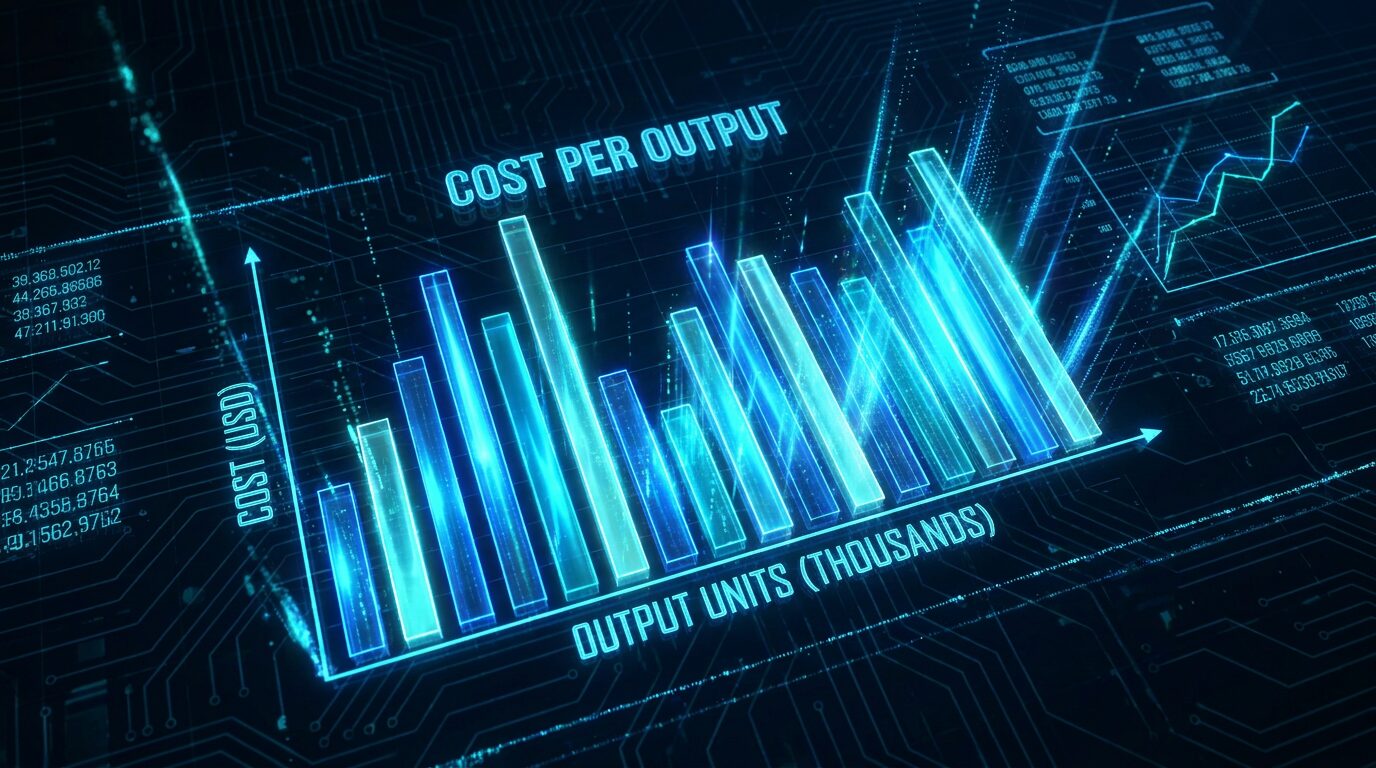
The reason to think in tokens, not per-generation prices, is that a single content workflow can mix modalities. A typical 60-second social clip might burn ~10 tokens on script writing, ~1 on a storyboard image, ~5 on the final video clip, and ~0.5 on a voice-over — ~16.5 tokens for a finished asset, which works out to well under a dollar of compute on a Pro plan. For the daily/monthly math, the token cost calculator is the fastest way to estimate your own usage.
🔥 Quick decision: If you're a working creator shipping weekly across multiple modalities, the Pro plan is the safest starting point.
See Pro plan →Who is actually using MiniMax?
The platform is most popular with three overlapping audiences. None are corporate Fortune-500 in the headline sense, though Enterprise plans exist for that case too.
Independent content creators
YouTubers, TikTokers, podcasters, newsletter writers, and Substack authors who produce weekly or daily. They use MiniMax to script intros, generate thumbnail images, animate B-roll, and lay voice-overs — basically the entire post-production stack. The Pro plan is the typical fit: cheap, commercial usage included, and API access for piping generation into custom automation.
Small marketing and e-commerce teams
Two-to-ten-person marketing teams that need ad creative, product imagery, and short social clips at a daily cadence. They use MiniMax in two modes: directly in the Studio for ad-hoc creative, and through the API to plug into CMS or e-commerce backends for things like automated product-image variants. The Business plan is the typical fit, partly for the team seats and partly for the higher token volume.
Developers building AI features
Indie developers and small product teams integrating MiniMax into their own apps. Use cases range from "AI image generation as a feature in my design tool" to "AI voice-over for my language-learning app" to "AI video in my social-media scheduling product." For this group the API is the product; Pro covers light use, Business covers serious production traffic. If you're a developer, the image generation API guide is the most concrete starting point.
How it compares to OpenAI, Runway, and others
The honest answer is that MiniMax isn't trying to beat any single competitor on a single modality — it's trying to be the best option when you need more than one. With that frame, here's how it stacks up against the platforms most people compare it to.
vs. OpenAI
OpenAI leads on text and chat, with strong image (DALL·E) and competitive video (Sora). Its advantages are a huge developer ecosystem, extensive docs, and best-in-class text reasoning. The tradeoffs are per-modality billing, no built-in voice cloning on consumer plans, and a fragmented experience if you want everything under one bill. MiniMax's edge is bundling: one account, one token economy, one Studio UI, four modalities. If your work is text-first, OpenAI is still the default; if it's multimodal-first, MiniMax is worth a serious look.
vs. Runway
Runway is a video-first platform with strong image tools and growing LLM support. It's best-in-class on motion graphics, camera control, and longer clips. The tradeoffs are price (Runway is more expensive per minute of video) and the fact that text and voice are not its strengths. MiniMax's edge is breadth — text and voice are first-class, and the API surface is more developer-friendly. If video is your entire product, Runway may still be the right call; if video is one of several modalities, MiniMax is the better default.
vs. Pika, Luma, Midjourney, ElevenLabs, etc.
The long tail of single-modality tools each have their niches. Midjourney is still a strong image-only aesthetic choice. ElevenLabs leads on voice cloning. Pika and Luma push the frontier on video. The case for MiniMax over any one of these: if you only need one modality, the specialist is probably better. If you need three or four, the integration cost of stitching specialists together usually outweighs the per-tool quality gap.
For a full feature-by-feature comparison table, see our dedicated MiniMax vs OpenAI vs Runway article.
Frequently asked questions
What is MiniMax AI?
MiniMax AI is a multimodal generative AI platform that bundles four modalities — text, image, video, and voice — behind a single interface, a single token-based pricing model, and a unified API. It's built for creators and developers who need more than one type of AI output in the same workflow.
Is MiniMax AI free to use?
MiniMax runs on paid token plans across four tiers. There is no permanent free tier, but the Starter plan (~$9/month) is inexpensive enough for evaluation, and trial credit offers occasionally appear on the platform homepage. Production usage almost always lives on Pro or higher.
What can you generate with MiniMax AI?
You can generate long-form text and code (LLM), still images and image variants, short video clips with optional audio, and natural-sounding voice-overs including cloned voices on higher tiers. All four modalities are reachable through the Studio UI and the public API.
Who is MiniMax AI for?
Independent content creators, small marketing and e-commerce teams, indie game studios, filmmakers prototyping pre-vis, and developers building AI features into their own products. Pricing and API are tuned to solo creators and small-to-mid teams; Enterprise plans exist for larger organizations.
How does MiniMax compare to OpenAI and Runway?
OpenAI leads on text and developer mindshare; Runway leads on high-end video. MiniMax's differentiator is bundling text, image, video, and voice under one token economy, one API, one Studio UI, and one bill — useful when you need multiple modalities in the same workflow.
Conclusion
MiniMax isn't a model — it's a platform. It's a place where text, image, video, and voice generation converge behind a single interface and a single token economy, and where the integration cost of running four separate tools basically disappears. That's useful, especially for working creators and small teams who don't want to manage four API relationships.
The tradeoffs are honest. No single modality on MiniMax is best-in-class the way Midjourney is for image aesthetics or Runway is for video motion. If you only need one modality, the specialist tool is probably still the right call. But if your work touches two or more — and most production content workflows do — MiniMax deserves a real evaluation. Start with the token plans article to understand the cost model, then put a small workflow through the Studio to feel the integration story.
The platform is moving fast, model quality is improving cycle-over-cycle, and the multimodal-first framing is increasingly where the rest of the industry is heading. Adopt early on a tier that fits your workload, and you can ride the upgrades without re-platforming.
Ready to try MiniMax yourself?
Pick a token plan and get the full multimodal stack — text, image, video, and voice — behind one account and one bill.
👉 Get Your Token Plan Now*Affiliate link — we may earn a commission at no extra cost to you.